Blog
Vapor retarder for gaps in wall covering? – GreenBuildingAdvisor


A few months ago, I asked about my wall assembly (Vapor barrier on interior with rigid foam exterior – GreenBuildingAdvisor)
TLDR: Wall assembly is: Steel siding – House wrap- 1″ exterior continuous insulation (taped and glued) – 6″ steel girts with 6″ R19 in the cavity, plywood/drywall covering the wall. The consensus was go ahead with the cavity but don’t do anything to slow down the wall drying to the inside of the building.
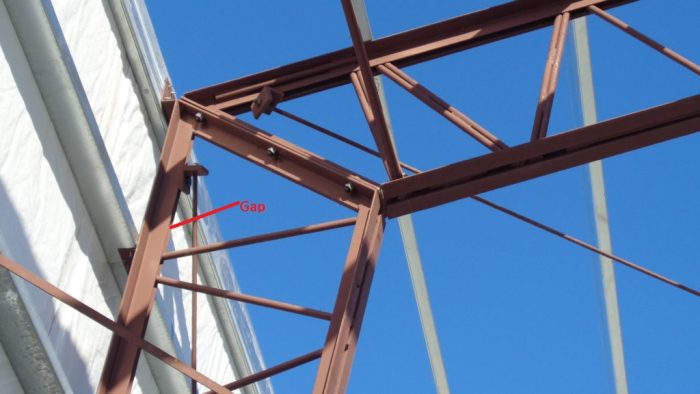
Question is this: The building has welded steel truss columns every 13-14 ft. Each truss a 3/4″ gap in the middle that goes from the floor (see attached picture). As you can see, I cannot cover this area with drywall. My first instinct was to just shove 1″ backer rod in the gap. But then I got to thinking that I should probably do a better job of air sealing. Further yet, I started to wonder, should I really be adhering some kind of vapor retarder at each of these wide gaps to promote the way drying (to the interior) easier? I am probably overthinking, but if a vapor barrier provides some substantial benefit, I want to go that route.
I have a few options:
Great stuff foam the area and paint
Glue a piece of 1/2″ foam to the backside (cavity side; it will compress the fiberglass insulation a little)
Glue a piece of kraft paper from the backside (cavity side)
Use backer rod and some kind of sealant (foam, caulking, etc)
Use tape from the wall cavity side (haven’t found many tapes that are vapor permeable)
Are any of these options most preferrable or does it really make a difference as long as I get a good air seal?
GBA Detail Library
A collection of one thousand construction details organized by climate and house part
Search and download construction details