
Blog
One of Five Cathedral Ceilings That Work By Martin Holladay – GreenBuildingAdvisor
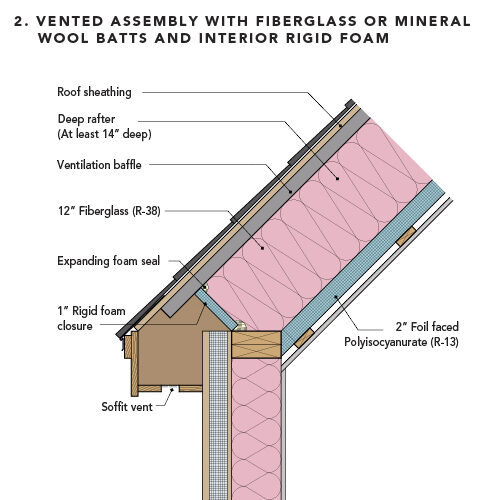
Replies
-
 Expert Member
MALCOLM TAYLOR | | #1
coward13,
The roof cavities still have some drying ability through adsorption and redistribution of moisture through each framing member, but yes, it’s safer to use permeable baffles. That can be a variety of materials like house-wrap, plywood, fiberboard, or even some foams like polyiso and thin EPS.
-

Thanks. Most articles (FHB etc) about the construction of home made baffles seem to favor foil faced iso or don’t make any distinctions between material choices. Some emphasize a tight seal around the baffle etc. and do not discuss drying issues. I think Martins suggestion to tape all seams on the bottom layer of the foil faced suggests that an air barrier is is the primary defense against moisture entering from the interior which may make the drying issue mute. All quite baffling 😉
-
Expert Member
MALCOLM TAYLOR | | #3
coward13,
Air sealing is definitely the best defense against moisture intrusion, but unfortunately even with diligence our houses aren’t airtight. What we consider a well sealed house at 1 ACH50 changes the entire interior air every hour on a windy day, so it’s best to have good drying capacity into the vent channel.
The inimitable Martin does a better job explaining all the issues that I can:
https://www.greenbuildingadvisor.com/article/site-built-ventilation-baffles-for-roofs