
Blog
New Climate Report Says the RCP 8.5 Worst-Case Climate Scenario Is Unlikely
Turns out things aren’t as bad as we thought, but there’s no cause to change course.
 By Justin R. Wolf |
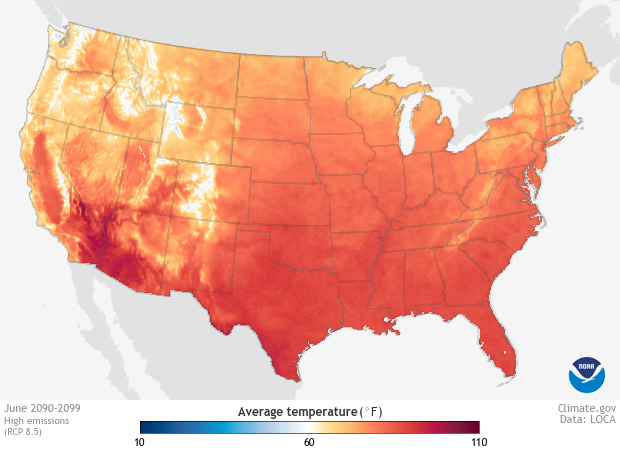
For anyone who has discussed or debated matters related to climate change with some degree of authority in the last 15 years, there’s a good chance your talking points were partly informed by something called RCP 8.5. Back in 2011, a peer-reviewed paper published in the journal Climate Change addressed Representative Concentration Pathways, which are specific climate change scenarios based on projected concentrations (not emissions) of greenhouse gases; these data later informed findings outlined in subsequent assessment reports published by the UN’s Intergovernmental Panel on Climate Change (IPCC). RCP 8.5 was the worst-case scenario (aka “high scenario”), projecting continual rise in emissions and an increase in global mean temperature up to 4.8°C by the end of the century.
While RCP 8.5 was not the only scenario (the 2011 paper outlined four pathways), a growing number of climate scientists have argued in recent years that 8.5 should have always been framed as an outlier rather than a foregone conclusion. It’s noteworthy that RCP 8.5 was basically presented as an outlier because it’s the only pathway that is considered “a baseline scenario that included no policy-driven mitigation,” according to reporting from 2019 in CarbonBrief. In other words, assuming we did nothing to decarbonize energy production and other industries going forward, we could well expect the worst-case scenario to come true. Fortunately, this appears to not be the case.
A new study of the Scenario Model Intercomparison Project (ScenarioMIP) published last April in Geoscientific Model Development–with the same lead author, Detlef Van Vuuren, senior researcher at the PBL Netherlands Environmental Assessment Agency, as the 2011 report–has concluded that RCP 8.5 is “implausible, based on trends in the costs of renewables, the emergence of climate policy and recent emissions trends.” While this is unquestionably good news, public responses have varied, and how various industries–from energy to transportation to construction–use…
Weekly Newsletter
Get building science and energy efficiency advice, plus special offers, in your inbox.

Sign up for a free trial and get instant access to this article as well as GBA’s complete library of premium articles and construction details.
Already a member? Log in
Weekly Newsletter
Get building science and energy efficiency advice, plus special offers, in your inbox.