
Blog
Massachusetts Updates Its SMART Program to Even the Solar Playing Field – GreenBuildingAdvisor

New emergency regulations anticipated the federal government’s ending of valuable tax credits
 By Justin R. Wolf |
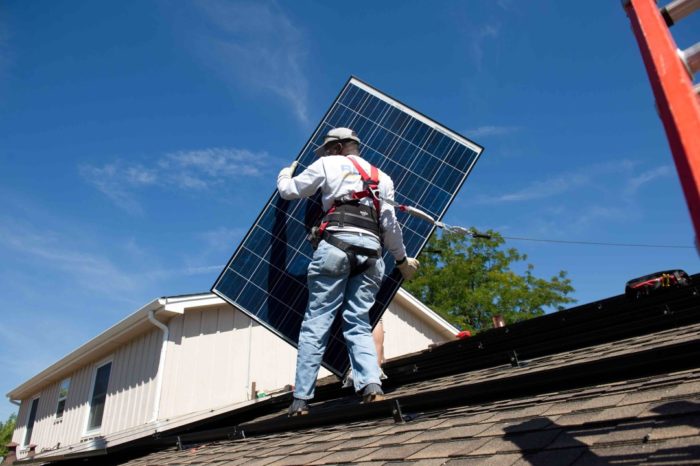
The recently enacted One Big Beautiful Bill Act is poised to set America’s solar industry back a decade or more, to a time when domestic production was scarce, overhead was low, and the financial incentives for homeowners were minimal to nonexistent. Further, new trade tariffs on imported modules and other components critical to PV production from China, Thailand, and other East Asian nations will impact the costs of going solar in the U.S. Product may be relatively affordable now, but that’s all about to change.
One big question that homeowners – and the industry at large – are pondering is this: How will states make up some of the ground that will be lost from the federal government withdrawing its support? The Commonwealth of Massachusetts just answered that in a big way.
Massachusetts gets SMART
Last June, the state released updated rules and regulations for its Solar Massachusetts Renewable Target (SMART) program. SMART is a tariff-based incentive program that first launched in 2018 as a replacement for Massachusetts’s State Energy Rebate and Credit (SERC) program. SMART pays homeowners and businesses for the solar energy they generate. But rather than offering rebates based on fluctuating market rates, SMART established a base compensation rate, initially launching with a competitive auction for utilities to bid on 100MW of solar energy.
With an average incentive of $0.17/kWh, SMART was designed to, over time, pay out roughly 30% of the price of installing solar, on top of the 30% federal tax credit (25D) and the state’s own $1,000 tax credit. Not too shabby. The problem with earlier versions of the program, however, was that they used a declining rate block structure, meaning incentive rates for residential customers dropped 4% with each subsequent enrollment period, or capacity block. (There were eight blocks of approximately 200MW…
Weekly Newsletter
Get building science and energy efficiency advice, plus special offers, in your inbox.

Sign up for a free trial and get instant access to this article as well as GBA’s complete library of premium articles and construction details.
Already a member? Log in
Weekly Newsletter
Get building science and energy efficiency advice, plus special offers, in your inbox.