
Blog
How to Size an ERV or HRV – GreenBuildingAdvisor
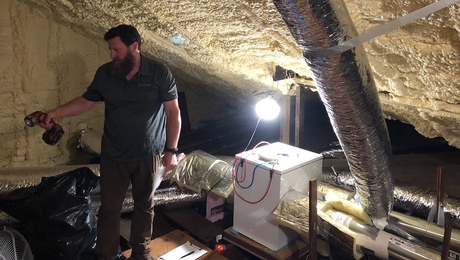
Let’s say you’re faced with the decision of sizing an energy recovery ventilator (ERV) or heat recovery ventilator (HRV). You’ve already decided you’re going with a balanced ventilation system with either heat and moisture recovery (ERV) or just heat recovery (HRV). And let’s say you’ve already figured out what your continuous ventilation rate is going to be. If, say, you’re looking to ventilate at 100 cubic feet per minute (cfm), what size ERV or HRV should you install?
Here’s a LinkedIn poll I did on this topic last month. Which do you think is the best answer?
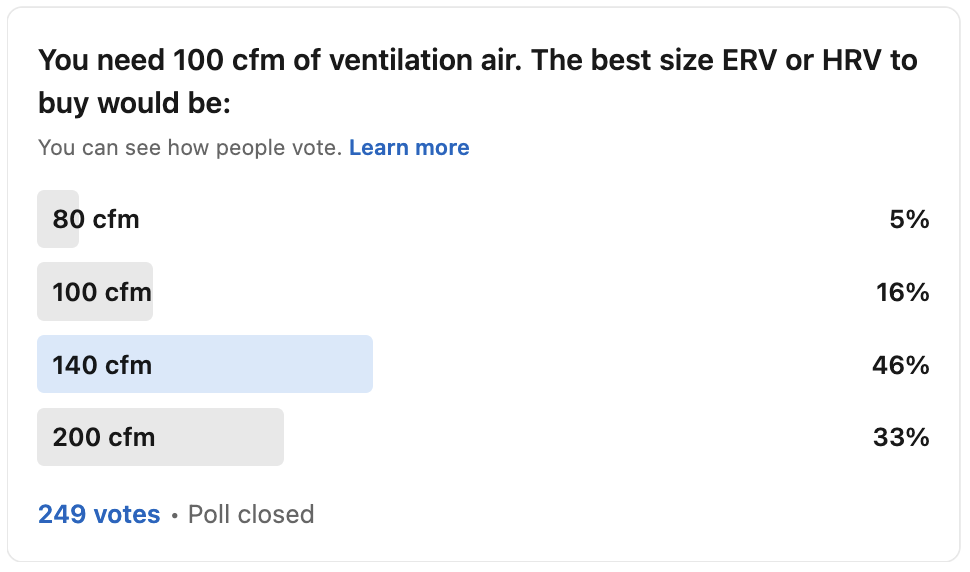
Low, spot on, or high?
If this were an air conditioner or heat pump, the answer would be low or spot on. That’s because Manual J heating and cooling load calculations result in calculated loads that are larger than actual loads. So, at worst, you want to size to what the calculated load is. (I’ve undersized my own heat pump and it works just fine.) Does that hold for ventilation too?
Or should you go to the high side? Going higher than the airflow rate you actually want isn’t the same as oversizing a heat pump or AC. Oversizing a heat pump or AC would have some negative consequences on comfort and humidity control. Would oversizing an ERV or HRV also have drawbacks?
Three reasons to go high
Actually, choosing an ERV or HRV airflow rate higher than the required continuous rate has significant benefits. In the ventilation designs we do at Energy Vanguard, we look for equipment that can move air at twice the continuous rate.
And there’s your official answer to the poll. Well, it’s our official answer anyway. The 33% who chose 200 cfm for an ERV that’s going to run continuously at 100 cfm had the best answer. But why?
1. Boost. The first reason to go with equipment that has a higher capacity than you need for continuous ventilation is so you can boost it when you need more. Not all ERVs let you do this, but it’s a great feature. I recently installed a Zehnder ERV in my house and can boost it by pushing a button.
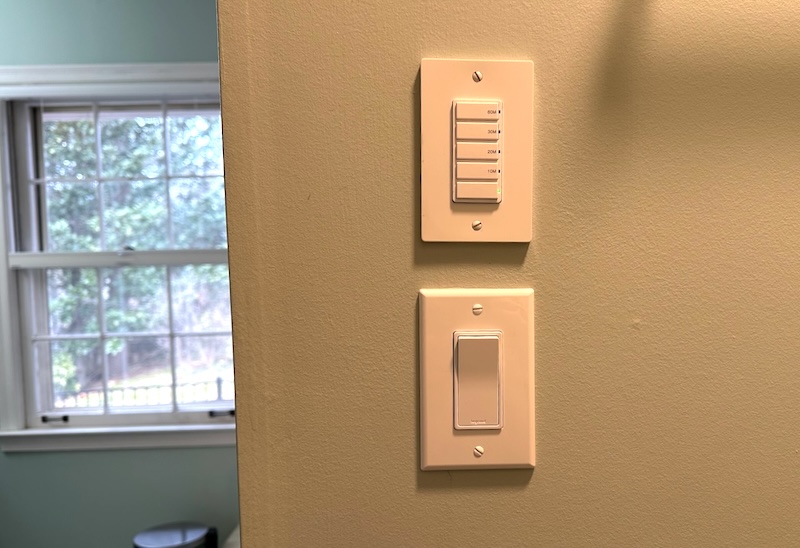
That’s a great way to get extra ventilation when you need it. It’s also necessary if you want to eliminate the exhaust fans from bathrooms.
2. Efficiency. The second reason to go big is for efficiency. If you’ve done research, you know that ceiling fans are more efficient at lower speeds. It’s the same with other fans. (Actually, it’s called efficacy, not efficiency, but I’ll let you decide whether you want to go down that rabbit hole.)
Here are some data I gathered while writing this article. I ran my Zehnder ERV at different airflow rates and looked at the power usage.
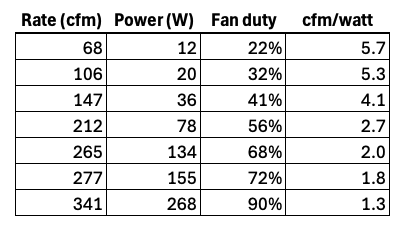
The column on the right side shows the efficacy in terms of cfm per watt. As I turned up the fan speed, that quantity decreased significantly. That’s why I say you’ll see an efficiency benefit by having your continuous ventilation at less than maximum speed.
But there’s more! What I said above applies only to the efficiency of moving air. The efficiency of heat and moisture exchange also improves when you run at less than full speed. I’ll dive into that topic in a future article.
3. Flexibility. Finally, having double the capacity you need allows you to adjust your continuous rate to a higher rate. Choosing a ventilation rate can be tricky, so it’s good to be able to have the flexibility to adjust your airflow rate up or down. Of course, reducing the airflow rate is easy even if you chose a 100 cfm ERV to run continuously at 100 cfm. But if you’re already maxed out at 100 cfm, going higher is impossible.
Wrap-up
The bottom line here is that if you’re sizing an ERV or HRV, go big. Doubling the maximum airflow rate from what you need for continuous ventilation gets you the benefits above. But you also have to pay attention to the specifications of the ERV you’re buying. Not all of them have the capability to run at different speeds or go into boost mode. So you have to do your homework. But now you know that going bigger is better.
Allison A. Bailes III, PhD, is a speaker, writer, building science consultant, and the founder of Energy Vanguard in Decatur, Georgia. He has a doctorate in physics and is the author of a bestselling book on building science. He also writes the Energy Vanguard Blog. For more updates, you can follow Allison on LinkedIn and subscribe to Energy Vanguard’s weekly newsletter and YouTube channel.
Weekly Newsletter
Get building science and energy efficiency advice, plus special offers, in your inbox.