
Blog
How Climate Goals Are Changing Building Energy Codes – GreenBuildingAdvisor
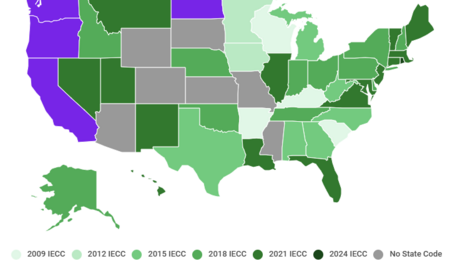
States and cities are using new approaches to energy codes to address efficiency, electrification, resilience, and carbon emissions. Colorado offers a look at where that shift may be headed.
 By Robby Schwarz |
Building codes have traditionally been slow-moving documents. Model codes are developed on three-year cycles, states and local jurisdictions decide whether and when to adopt them, and amendments are made along the way. That process can mean years pass before new building-science knowledge and construction practices make their way into code. But climate and energy goals are beginning to put pressure on that traditional process.
There are states, including Colorado and Wyoming, that leave building-code adoption and enforcement to individual cities and counties. These states are called home-rule states. Other states, like California and Georgia, set mandatory statewide minimum building codes but permit local jurisdictions to enact local amendments, generally if they are more stringent. Lastly, there are approximately 10 states, including Florida, Ohio, and Wisconsin, where local governments cannot freely implement separate independent code variations.
Who writes the building code, and what are stretch codes?
Traditionally, states and communities (excluding California) do not write their building codes from scratch; instead, they rely on organizations like the International Code Council (ICC), whose primary focus is to create model building codes for governments to adopt. When a state or local jurisdiction adopts a building code, it amends some things, and the amended code becomes a law governing how a building is built in that jurisdiction.
Massachusetts and New York have some of the strongest and most advanced building energy-efficiency and “stretch” codes in the United States. Both states established climate action roadmaps to move toward clean, resilient, and affordable energy systems.
Stretch codes provide one way to connect those goals to buildings. They can introduce advanced design and construction practices before those requirements become part of a base energy code. They also give designers, builders, code officials, and tradespeople an opportunity to become familiar with practices that may eventually become standard.
In that…
Weekly Newsletter
Get building science and energy efficiency advice, plus special offers, in your inbox.

Sign up for a free trial and get instant access to this article as well as GBA’s complete library of premium articles and construction details.
Already a member? Log in