
Blog
Ferrock: A Carbon-Storing Alternative to Cement – GreenBuildingAdvisor
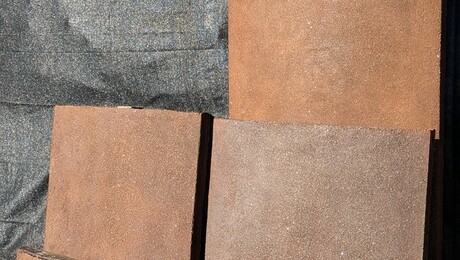
The inventor of Ferrock, a cement-free building material made using waste steel dust, speaks with GBA about his promising material
 By Justin R. Wolf |
The green building and climate science communities, broadly speaking, are obsessed with one thing: carbon. The word has become a catchall for everything that plagues us, past, present and future. There’s carbon in our energy production, our manufacturing, and our means of travel, to name just a few daily rituals, to say nothing of the carbon spent on wars. Interestingly, despite humanity’s worst efforts, some organic networks–fungi, kelp, and algae among them–maintain the capacity to consume tons upon tons of atmospheric carbon. The natural world constantly strives for equilibrium amidst chaos.
Many in the building industry have taken their cues from such systems and devised a variety of structural and insulation products–incorporating things like fungal mycelium and biochar from agricultural byproducts–that effectively act as carbon sinks, often with little to no upfront (aka embodied) carbon associated the manufacturing phase. One drawback with these solutions is the carbon sequestration capacity of such products is finite. But what if a building product could sequester carbon continuously, and become an active carbon sink after it’s been installed? That is the promise of Ferrock.
The chemistry is oxidation
Ferrock is a cement-free, iron-based material that was developed by Dr. David Stone in 2006, while teaching at the University of Arizona. Stone is the founder and technical manager of Ferrock Fabrication, based in Silver City, NM. A portmanteau of ferrum (iron) and rock, Ferrock began with the premise: What if construction materials could fight climate change instead of causing it?
By combining industrial steel dust waste, which is the key active ingredient, with silica sources like recycled crushed glass or fly ash and mixed with just about any water source (sea water and wastewater included), the proprietary mixture reacts with and absorbs CO2 during the curing process, and releases…
Weekly Newsletter
Get building science and energy efficiency advice, plus special offers, in your inbox.

Sign up for a free trial and get instant access to this article as well as GBA’s complete library of premium articles and construction details.
Already a member? Log in