
Blog
Design-Build Lessons from a 1.8-Million-Square-Foot Campus Neighborhood – GreenBuildingAdvisor
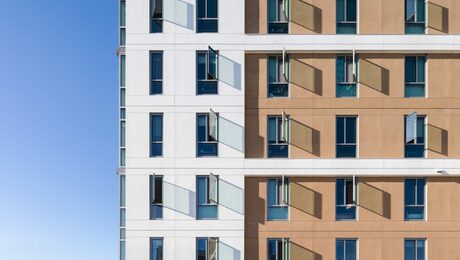
Delivering LEED Platinum on a single building is challenging. Doing it across six buildings totaling 1.8 million square feet—while working under a fixed-price design-build contract—is something else entirely.
In part 1 of this series, we examined how the North Torrey Pines Living and Learning Neighborhood (NTPLLN) at the University of California, San Diego, used climate-specific natural ventilation, modeling, and enclosure improvements to reduce measured energy use by 81%. Operable windows, trickle vents, negative-pressure exhaust, and massing tuned to prevailing breezes formed the backbone of the project’s passive strategy.
But high-performance design is only half the story; the second half is delivery.
Designed by HKS in collaboration with Clark Construction, Safdie Rabines Architects, OJB Landscape Architecture, and a large consultant team, the 1.8-million-square-foot development required six individual buildings to achieve LEED Platinum under a fixed-price design-build contract—with only three and a half months allocated for the competition phase.
If part 1 was about physics, this article is about process: How do you protect ambitious energy and carbon goals when pricing is fixed early, documentation is incomplete, and six buildings must perform consistently as a unified neighborhood?
For Jeff Larsen, principal and regional practice director at HKS, the answer begins with early alignment: “Sustainability strategies had to be established very early and then championed all the way through the constant management of the construction budget.”
What follows is less about windows and more about systems thinking: embodied carbon within a concrete structural system, weekly cost-and-performance adjustments, and the importance of embedding building-science leadership inside the design-build team from day one.
Setting Energy and LEED Performance Targets Early
The University of California system has a stated goal of carbon neutrality, and the NTPLLN project was expected to advance campus-wide sustainability commitments. A 1,400-page Detailed Project Program (DPP) established minimum energy performance requirements for…
Weekly Newsletter
Get building science and energy efficiency advice, plus special offers, in your inbox.

Sign up for a free trial and get instant access to this article as well as GBA’s complete library of premium articles and construction details.
Already a member? Log in