
Blog
Canadian Manufacturer Has Scalable, Low-Carbon Solution for Asbestos Mine Waste – GreenBuildingAdvisor
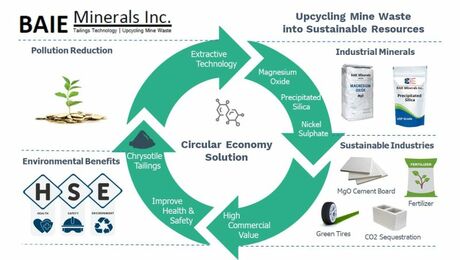
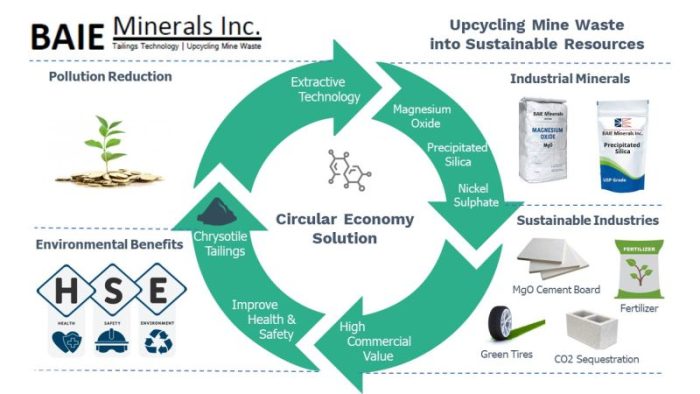
BAIE Minerals produces decarbonized minerals for building products while also remediating environmental blight
 By Justin R. Wolf |
Baie Verte, in north central Newfoundland, Canada, is one of several communities that comprise the island’s Emerald Zone. In the 1950s, a large deposit of asbestos was discovered, and Baie Verte (French for “Green Bay”) was quickly transformed into a company town, with a large-scale asbestos mining operation that supported the community for the next three decades.
Trina Barrett grew up in Baie Verte. Her father worked as a foreman in the asbestos mine while the family lived in a housing complex on the mine site. When the mine shut down in the 1990s, it left mountain-sized piles of unremediated mine waste in her hometown, which Barrett calls “an environmental justice problem.” Asbestos is a known carcinogen with respiratory toxicity; the orphaned mine waste also contains high concentrations of industrial and critical minerals. The company Barrett co-founded with Mike Sullivan, BAIE Minerals, develops and commercializes technologies that can remove toxic asbestos fibers and extract high-value minerals, thus transforming an environmental liability into a source of economic value.
BAIE Minerals reclaims asbestos mine tailings and upcycles these waste streams into decarbonized minerals, which have a broad range of industrial uses in the cement, construction, and fertilizer markets. The mine waste also contains commercial quantities of critical metals including nickel, manganese, and cobalt used in energy transition markets. The company is taking on environmental blight on a very local scale, and from it, producing a solution with global reach.
A waste-to-value solution
According to Barrett, she and Sullivan “started with a huge problem and developed a technology to address it.” Asbestos is a hard thing to destroy, she says, so the necessary first step is to destroy it “before we can make a safe feed stock” for cement replacement and other uses.
Sullivan’s background is in resource reclamation and waste management,…
Weekly Newsletter
Get building science and energy efficiency advice, plus special offers, in your inbox.

Sign up for a free trial and get instant access to this article as well as GBA’s complete library of premium articles and construction details.
Already a member? Log in
Weekly Newsletter
Get building science and energy efficiency advice, plus special offers, in your inbox.