
Blog
Building Science Puzzle: Powder Room Ceiling Mold, Part 2 – GreenBuildingAdvisor
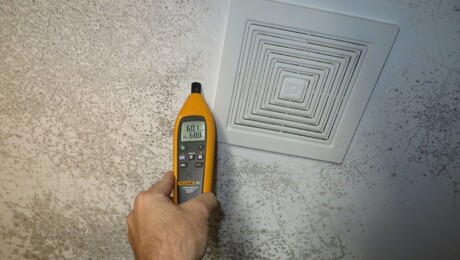
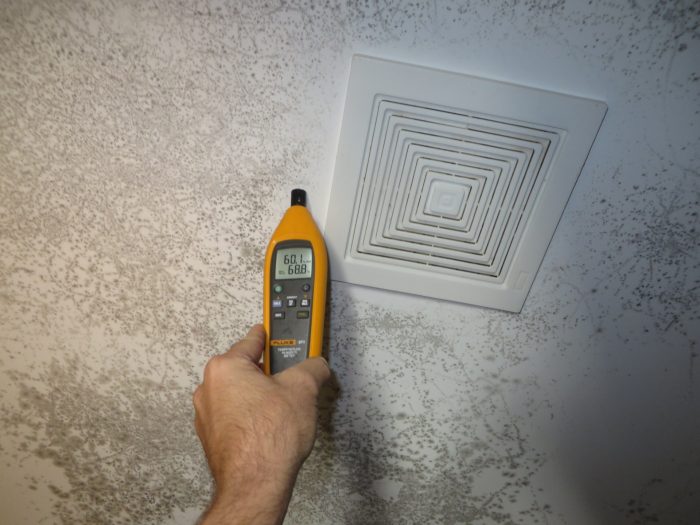
This is the second post of GBA’s series, “Building Science Puzzles.” The first post, which you can read here, discussed the reasons for the investigation, explained the process, and shared the observations, data, and other findings that were collected. This second post, published a week after the first, details the answer, or at least a hypothesis about what is going on. There may be additional clues to the puzzle in the comments section of the first post.
Powder Room Ceiling Mold
Outdoor air in Washington DC summers is fairly humid, often over 70-degree dew point. (Not like Gulf Coast-Florida humid where 80-degree dew points happen for days on end, but humid enough to cause problems.) Humid air with a 75-degree dew point will drop off moisture on any surface that’s below 75 degrees in temperature, and many people set their thermostats lower than that. If 75-degree dewpoint outdoor air leaks into an air-conditioned house where surfaces are at 70-degrees, moisture will accumulate on those surfaces.
Bath fans are ducted straight to the outdoors (at least they’re supposed to be), so there is a direct pathway for that humid outside air to enter the home. A typical bath fan installation includes a one-way flapper on the outlet of the duct, and most include a damper at the fan itself. However, many of these backflow prevention devices aren’t of the highest quality. The plastic flapper included with most bath fans has a clearly visible gap on all sides, when it isn’t accidentally pinned open by a screw securing the ducting to the fan. And typical lumberyard/home center outside exhaust terminations usually don’t close that well before the wind, birds, and bugs get to them.
When there is a visible moisture issue around a bath fan in…
Weekly Newsletter
Get building science and energy efficiency advice, plus special offers, in your inbox.

Sign up for a free trial and get instant access to this article as well as GBA’s complete library of premium articles and construction details.
Already a member? Log in
Weekly Newsletter
Get building science and energy efficiency advice, plus special offers, in your inbox.