
Blog
A Closer Look at Self-Adhered WRBs – GreenBuildingAdvisor
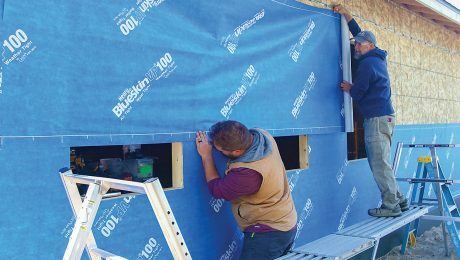
Modern peel-and-stick water-resistive barriers help control air and water and improve building durability in challenging conditions.
 By Joshua Salinger |
Self-adhered (SA) water-resistive barriers (WRBs) have evolved from traditional housewraps and now provide both water protection and improved air control, making them especially useful in renovations and airtight building assemblies. Their continuous adhesive bond reduces fastener penetrations, limits air and water movement, bridges gaps and irregular surfaces, and offers advantages over mechanically attached, liquid-applied, and integral sheathing WRBs. Although SA WRBs generally cost more and require careful installation, their durability, ease of detailing, and improved air and moisture management make them a worthwhile investment.
The Rise of WRBs
Early American wood-framed houses often had wood siding fastened directly to studs. The siding shed a lot of water but did little to keep wind out of the house, so smart builders started installing a layer of rosin paper between the siding and the studs. Water management was not the intent; these original “housewraps” were installed to reduce drafts and improve comfort.
By the early 20th century, asphalt-impregnated felt appeared on the market. This material provided some degree of water resistance while continuing to serve the draft-control role. With changes in how we build, the industry’s focus shifted to managing bulk water, including the introduction of the first synthetic housewraps. “Water-resistive barriers” eventually became a product category—and a code requirement. Installation details became critical.
Today the emphasis on airtightness for comfort, energy efficiency, and durability has brought these materials back to one of their earliest functions. In addition to managing water, many modern WRBs also serve as part of the building’s air barrier.
All of this explains the rise of the self-adhered WRB, a category that has exploded in recent years. Also called peel-and-stick or fully adhered WRBs, SA WRBs perform a water-shedding role similar to that of building paper and mechanically fastened housewraps, but they also do a…
Weekly Newsletter
Get building science and energy efficiency advice, plus special offers, in your inbox.

Sign up for a free trial and get instant access to this article as well as GBA’s complete library of premium articles and construction details.
Already a member? Log in