
Blog
Diagnostic Tools We Use: Single-Channel Manometer – GreenBuildingAdvisor
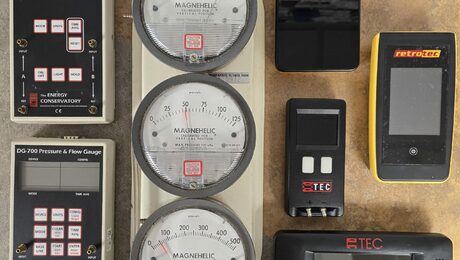
Used with care, manometers turn invisible building forces into practical insights
 By Randy Williams |

In physics, a fluid is any substance that flows and takes the shape of its container, a definition broad enough to include both liquids and gases. In building science, we work with both. Liquid water is the most damaging fluid a structure faces, while air’s constant movement in and out of the enclosure is something we measure often.
Air doesn’t stand still, and pressure differences drive air (and moisture) through buildings, often through complex pathways that are hard to visualize. That’s where a manometer comes in. It’s one of the tools that lets us measure those invisible forces and understand what’s happening in a home.
Builders and energy auditors know manometers from blower door tests. But these modern electronic boxes do a lot more than help us get to 50 Pascals. When used to their potential, they can tell us how air is moving, where risks exist, and why some buildings have problems.
What is a manometer?
A manometer is an instrument for measuring pressure differences.
- The old-school version was a clear U-tube filled with water or some other liquid, with changes in water height showing pressure differences.
- The early blower doors used analog gauges to measure air-pressure differences between inside and outside the structure.
- Today, almost all building investigations, energy audits, and building commissionings rely on digital manometers. They’re small, portable, and accurate, and most of the models we use in the diagnostics industry measure down to a tenth of a Pascal.
You’ll see pressure reported in Pascals (Pa) in most building-science work. HVAC and combustion techs may still use inches of water column (in. w.c.), but the idea is the same: A very small pressure difference can move a lot of air.
…
Weekly Newsletter
Get building science and energy efficiency advice, plus special offers, in your inbox.

Sign up for a free trial and get instant access to this article as well as GBA’s complete library of premium articles and construction details.
Already a member? Log in
Weekly Newsletter
Get building science and energy efficiency advice, plus special offers, in your inbox.