
Blog
Wood Shingles, Rainscreens, and Continuous Insulation – GreenBuildingAdvisor
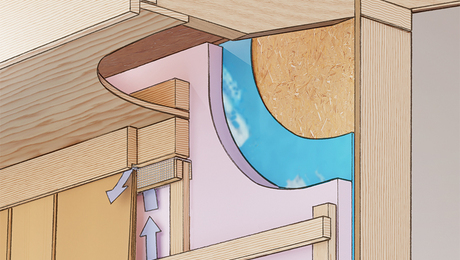
Each individual component has their own challenges, combining all three requires proper planning and execution
 By Grant Baver |

More Energy-Smart Details


Building codes are moving towards the use of continuous exterior insulation and drainable rainscreen systems. Moving beyond drainable rainscreens, vented rainscreens can add even more durability to a wall system. These are all topics that have been discussed many times here on GBA; the links below provide more information. Wood shingles (and vertical cladding systems) add a wrinkle to these assemblies and will be the topic for today’s Energy Smart Details.
- Continuous Insulation, Part 1 – GreenBuildingAdvisor
- Continuous Insulation, Part 2 – GreenBuildingAdvisor
- All About Rainscreens – GreenBuildingAdvisor
When installing wood shingles or vertical cladding systems on a rainscreen over continuous insulation, the biggest challenge is having something for the cladding system to attach to. When shingles are installed directly over sheathing, the sheathing provides a nailer wherever the shingles land.
Unfortunately, once you add continuous insulation, attaching the shingles to the sheathing becomes ineffective. Nails cannot provide enough strength to secure the shingles through the insulation. You must provide another nail base, outward of the insulation. Unlike common siding materials, which have long lengths running horizontally, vertical furring strips don’t provide nailing where it is needed for shingles or vertical cladding systems.
To address this, you have two main options that could provide this secondary nail base. The first is either to install a second layer of sheathing over the exterior insulation or to use a nailbase panel, which combines the insulation and sheathing in one product. (Huber’s Zip R-Sheathing is a readily available nailbase panel.) This option provides a surface that offers nailing pretty much anywhere and allows the rest of the work to continue almost exactly as if there were no continuous insulation layer. After you install and detail the WRB, windows, and flashings as usual, a woven rainscreen product can be used to create the rainscreen gap behind the…
Weekly Newsletter
Get building science and energy efficiency advice, plus special offers, in your inbox.

Sign up for a free trial and get instant access to this article as well as GBA’s complete library of premium articles and construction details.
Already a member? Log in
Weekly Newsletter
Get building science and energy efficiency advice, plus special offers, in your inbox.